Technology and Biodiversity: The Future of Sustainable Forestry
Forest companies use technology to protect wildlife, integrating conservation and production in the bioeconomy, with positive sustainability impact.

The integration of advanced technologies in forest management is redefining the relationship between industrial production and environmental conservation, marking a significant advance for the bioeconomy and corporate sustainability. Companies in the pulp and paper sector in Brazil are at the forefront of this transformation, using innovative tools to monitor and protect biodiversity in their vast management areas.
This strategic movement not only strengthens ESG (Environmental, Social, and Governance) practices but also demonstrates how the circular economy can be applied on a large scale, where the production of renewable resources coexists with the preservation of vital ecosystems. The adoption of nature-based solutions and technological innovation are crucial for the balance between economic development and ecological integrity.
Technology at the Service of Wildlife Conservation
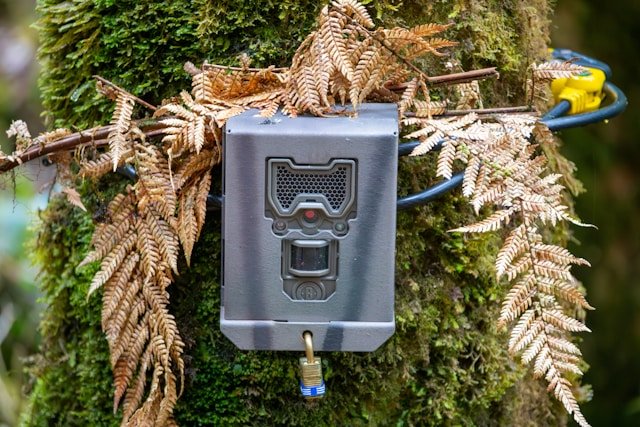
Biodiversity monitoring in planted forests has been revolutionized by innovations such as camera traps with motion and temperature sensors, autonomous audio recorders, and drones equipped with thermal cameras. These tools allow for the identification and tracking of species, including those difficult to visualize, such as nocturnal animals and insects, significantly expanding the capacity to generate precise scientific information [1].
Companies like Klabin and Suzano have successfully implemented these technologies. Klabin, for example, uses artificial intelligence to process and sort the large volume of collected data, accelerating the preliminary identification of species. Suzano, in partnership with the Federal University of Viçosa, employs drones with thermal sensors to locate and monitor primates, ensuring that its operations are aligned with biodiversity protection [1].
The results of these efforts are remarkable. Dexco has recorded more than 2,600 species of fauna and flora in its forests since the 1970s. Suzano accounts for more than 4,500 species identified since 1989, including 190 threatened and 180 endemic species. Klabin reached 1,971 species of flora and 946 of fauna by 2024, with 70 threatened species in its areas [1].
Certified Forest Management and Ecological Corridors
Forest certification, such as that from the FSC (Forest Stewardship Council), plays a fundamental role in biodiversity conservation. A 2024 study indicated that FSC certification contributes to biodiversity conservation, including rare and threatened species, albeit with geographical and taxonomic variations [2]. Companies with certified forest management are encouraged to identify and protect relevant sites for wildlife conservation within their productive bases [1].
The mosaic management strategy, which intersperses production areas with fragments of native vegetation, is another essential practice. This model creates ecological corridors that connect different environments, favoring wildlife circulation and maintaining ecological connectivity. Klabin, for example, maintains 41% of its 911 thousand hectares of total area as conserved native areas, while Suzano preserves approximately 1.1 million hectares of native vegetation [1].
Implications for the Global Bioeconomy
Precision forestry, driven by these technologies, is becoming a vital component of the global bioeconomy. The global precision forestry market, valued at approximately US$ 3.54 billion in 2025, is projected to grow to US$ 4.70 billion by 2030, with a compound annual growth rate (CAGR) of 6.0% [3]. This growth reflects the recognition of the importance of forest management practices that optimize both production and conservation.
The pulp and paper industry, traditionally a pillar of the circular economy, is adapting to further integrate biodiversity conservation into its business models. The adoption of zero-deforestation policies and nature strategies, such as Suzano’s in collaboration with the International Union for Conservation of Nature, demonstrates a growing commitment to the mitigation hierarchy: avoid, reduce, restore, regenerate, and transform [1].
Opportunities and Next Steps
For stakeholders, it is essential to observe the evolution of these practices. Continuous technological innovation and the expansion of certified forest management indicate a future where resource production and biodiversity conservation can be mutually beneficial. Investment in research and development, collaboration between academia and industry, and the promotion of policies that encourage corporate sustainability are crucial steps.
The transition to a truly sustainable bioeconomy requires companies not only to minimize their impacts but also to become active agents in the restoration and protection of ecosystems. The experience of Brazilian forest giants offers a promising model of how technology and responsible management can drive wildlife conservation, generating environmental and economic value.
References